Sous Vide Cha
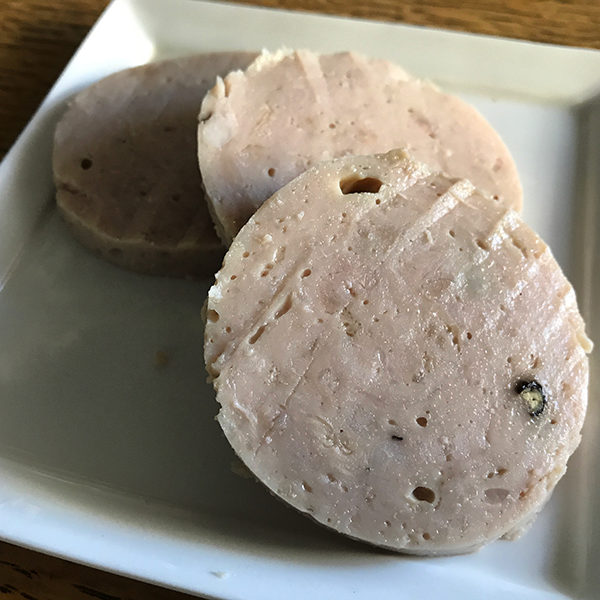
Each one of us has some type of food that brings us comfort and a sense of home. For me, that food is chả (or if you are from Northern Vietnam it is called giò lụa). Chả traditionally is ground pork with spices and baking powder wrapped in banana leaves and steamed.
As a kid I grew up eating chả in many dishes such as bánh mì (sandwiches), bánh cuốn (rice crepes), or as a snack. The appeal of it really to me is the consistency. It is super soft and savory. The texture should have a slight sponginess springiness when you bite into it.
If you take a look at some of the recipes on youtube
You will see the laborious nature of the recipe.
I first learned how to make chả from one of the elderly ladies at church. Her name is Cô (auntie) Hien. Since our church doesn’t eat pork, we’ve re adapted the recipe to use ground chicken.
In her recipe, she taught me that you first have to put chicken thighs in the food processor and then add water, tapioca starch, fish sauce, and baking powder. You then freeze it for a couple hours and put it back in the food processor.
It was pretty tough to get the recipe from her since my Vietnamese isn’t that great. When communicating with her there is a slight sorrow in my heart that I can’t articulate and ask questions I’ve always wanted to ask her. Things such as what her favorite food is, my thoughts on modern Vietnamese food, and countless other recipes in her brain that I would like to document.
After she taught me the recipe I never really could get it down right. It was frustrating to constantly steam the chả and never get the texture quite velvety. The dish seems so simple, but there is such a low error of margin that separates good chả vs bad chả.
Months later I was randomly thinking about the recipe after doing a sous vide chicken. I think to really understand a recipe is to learn the context of why certain things are being done and where it is being done.
First off, banana leaves in Vietnam are fairly abundant. You can walk up to any tree and just clip some off. It is basically nature’s equivalence to foil. If you think about it way back when, Vietnam didn’t have any foil and ended up using banana leaves for many dishes that require steaming.
Second off is the situation with the freezing of the meat with the food processor. Why is this even being done? I realized the reason is to drop the temperature of the meat, so when it is steamed it is able to cook the loaf more gently and not overcook the edges if you didn’t freeze it.
If you think about it, you can avoid the whole freezing and food processor business if you sous vide the chả for 160 degrees for an hour (taking the example time of cooking a chicken thigh).
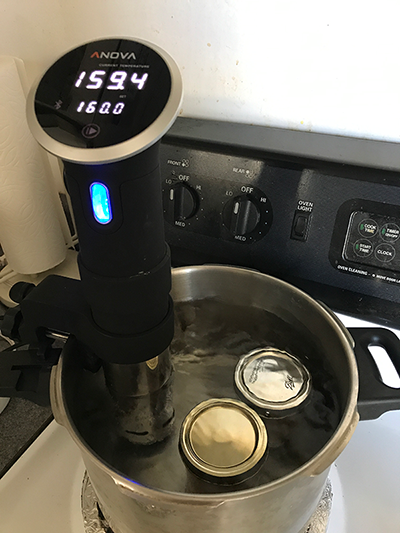
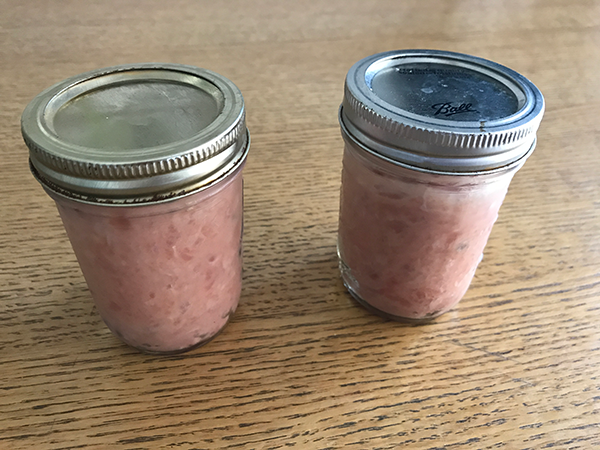
Instead of banana leaves you can put the meat in mason jars to have it hold the shape better. It took me a couple of tries to get the recipe right, but I finally was able to get something pretty close to what Cô Hien would make.
I know I can buy Chả at a local specialty shop in Westminster, but I am in peace knowing if I am ever away from home, I can always make this dish wherever I am in the world (assuming I have a sous vide machine handy), to bring back a part of my childhood and heritage.